

How Droopy Eyelids Affect Appearance and Vision

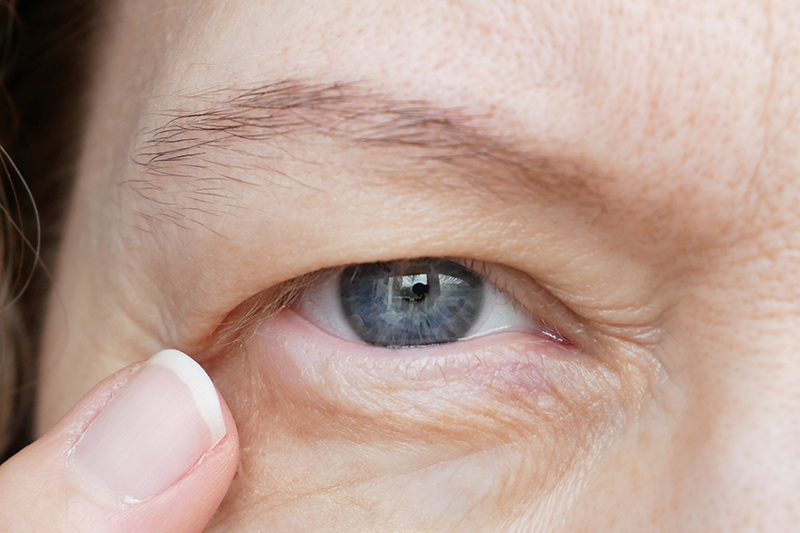
Droopy eyelids do not always affect appearance alone. Depending on their cause and severity, they can change how open or symmetrical your eyes look and, in more pronounced cases, interfere with your field of vision.
It is also important to distinguish true eyelid drooping from excess upper eyelid skin, as these conditions affect different structures and may require different approaches. In this article, we explain how droopy eyelids can affect your expression, appearance and vision, and when further assessment may be appropriate.
Key Takeaways
- Droopy eyelids can affect expression, facial appearance and, in some cases, vision
- Ptosis occurs when the upper eyelid itself sits lower than its normal position
- Excess upper eyelid skin can resemble ptosis but has a different underlying cause
- Treatment depends on your eyelid anatomy, severity and whether vision is affected
What Causes Droopy Upper Eyelids?
A droopy upper eyelid can develop for several reasons, so identifying the underlying cause is an important first step.
Common possibilities include:
- Age-related changes: The muscles and supporting tissues involved in lifting the eyelid can weaken or stretch over time
- Excess eyelid skin: Ageing may contribute to looser or excess upper eyelid skin, which can fold over the natural eyelid crease.
- Congenital ptosis: Some people are born with a weakness in the muscle responsible for raising the eyelid
- Nerve or muscle conditions: Less commonly, drooping may be related to neurological or muscular disorders
- Previous surgery or injury: Changes to eyelid structures can sometimes occur following eye procedures or trauma
Because these causes require different approaches, drooping should not automatically be assumed to be a cosmetic ageing concern.
How Droopy Eyelids Can Affect Your Appearance
Your upper eyelids contribute to how open and alert your eyes appear. When one or both eyelids sit lower, your facial expression may change even when your mood has not.
You may notice:
- A persistently tired or sleepy appearance
- One eye appearing smaller than the other
- Greater asymmetry between the eyes
- A heavier appearance around the upper eyelids
These changes can be particularly noticeable in photographs or when comparing your current appearance with older images. Importantly, looking tired does not necessarily mean tiredness is causing the drooping.
When Do Droopy Eyelids Affect Vision?
As eyelid drooping becomes more pronounced, it may extend into the upper part of your visual field.
Possible signs of functional impairment include:
- Difficulty seeing objects above you
- Reduced upper peripheral vision
- Needing to lift the eyelid manually
- Raising the eyebrows frequently to keep the eyes open
- Difficulty with activities such as reading or driving
Not everyone with droopy eyelids experiences visual obstruction. The position of the eyelid and severity of the drooping help determine whether the concern is primarily cosmetic, functional or both.
How Do Ptosis and Excess Eyelid Skin Differ?
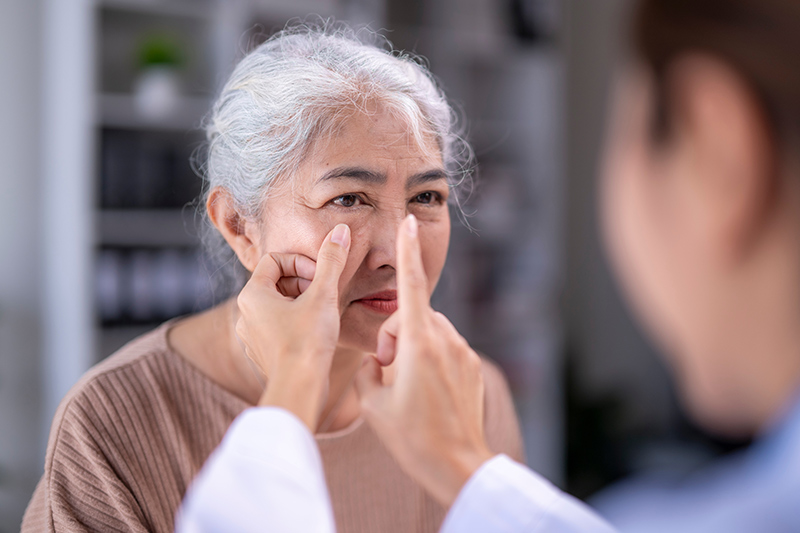
Although they can look similar, true ptosis and excess upper eyelid skin involve different structures.
Ptosis
Ptosis occurs when the upper eyelid margin sits lower than its usual position. It may be related to changes affecting the levator muscle or its tendon, which help lift the upper eyelid.Excess Upper Eyelid Skin
Loose or excess skin can fold over the eyelid without the eyelid margin itself being abnormally low. This is known as dermatochalasis and becomes more common with ageing.Some people have both conditions at the same time. An examination can distinguish between them and determine which structures need to be addressed.
When Might Surgery for Droopy Eyelids Be Considered?
Depending on the underlying cause and the individual's concerns, surgery may be considered when drooping affects appearance, causes noticeable asymmetry or interferes with vision. The procedure used depends on which structures are responsible for the problem.
For true ptosis, ptosis surgery may involve adjusting or strengthening the muscle or tendon responsible for lifting the upper eyelid. If excess upper eyelid skin is the main concern, upper blepharoplasty may instead be performed to remove excess skin and address the eyelid contour.
Where both ptosis and excess skin are present, treatment may need to address both issues.
Assessing Droopy Eyelids
Changes around the eyelids can be easy to dismiss as a normal part of ageing, particularly when they develop gradually. However, determining whether the eyelid itself is drooping, excess skin is contributing or vision is becoming affected provides a clearer basis for deciding what to do next.
At Colin Tham Plastic Surgery in Singapore, Consultant Plastic Surgeon Dr Colin Tham assesses droopy eyelids based on their underlying cause, severity and impact on appearance or vision. Where treatment is appropriate, recommendations are tailored to your individual eyelid anatomy and concerns. Schedule a consultation if you would like your eyelids assessed and discuss whether treatment may be suitable for you.
FAQs About Droopy Eyelids and Ptosis
Can droopy eyelids cause forehead strain?
They can. Some people repeatedly contract their forehead muscles and raise their eyebrows to compensate for a low eyelid. Over time, this may contribute to forehead fatigue or discomfort.Can ptosis affect only one eye?
Yes. Ptosis may affect one or both eyes, and the degree of drooping can differ between sides. When one eyelid is lower, the resulting asymmetry may make the condition particularly noticeable.Can contact lenses contribute to ptosis?
Long-term contact lens use has been associated with acquired ptosis in some people, particularly with repeated pulling of the upper eyelid. However, eyelid drooping can have several causes and should be properly assessed.
About Our Plastic Surgeon
Consultant Plastic & Cosmetic Surgeon MB ChB (Aberdeen), FRCS (Ireland), FAMS
Dr Colin Tham is an MOH-accredited plastic surgeon in Singapore with expertise in aesthetic and reconstructive procedures. After obtaining his Bachelor of Medicine and Surgery from the University of Aberdeen, Scotland, Dr Tham specialised in plastic surgery. He set up the Aesthetic Centre in Singapore’s premier KK Women’s and Children’s Hospital, where he continues to serve as a visiting consultant. Dedicated to achieving natural-looking results, Dr Tham has been involved in the development of several non-invasive aesthetic procedures. Recognised for his expertise, Dr Tham is frequently invited to train doctors internationally, contributing to the global development of aesthetic medicine.